


Former pacer Suraiya Azmin emailed the Bangladesh Cricket Board (BCB) on May 9 requesting paid maternity leave and received no response. She gave birth in August and found herself dropped from the national contract list, with her leave request and unpaid wages unsettled. She received zero support from BCB and lost her livelihood in the process of giving birth.
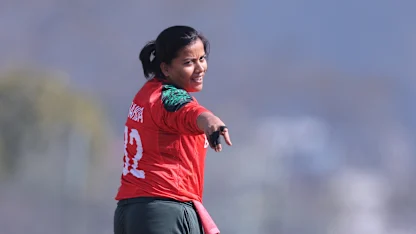
Sanjida Islam Moyna, who played in 70 international one-day and T-20 matches and continued in domestic cricket after her marriage but stepped away after giving birth in 2025. She said that cricket officials and selectors assume married players and mothers will not last and see no point in investing in them.
The point is that those assumptions are never applied to anyone other than women. A male cricketer can become a father and return to training, but no such guarantee is afforded to women. The system does not need to explicitly bar mothers from playing cricket. It simply makes it so difficult for expecting and new mothers to continue their careers that they are eventually forced to leave, allowing their departure to be portrayed as a “personal choice”.
Some players delay marriage to prolong their careers;
Some players delay marriage to prolong their careers; others hide that they are married because they know the price of the tag. Former Bangladesh player and current Qatar women’s team head coach Fatema Tuz Jahara points to the money. A national contract often supports a whole family, so a female player has to “think ten times” when it comes to pregnancy. Women are asked to choose between family and sports when men do not have to make that choice.
A different approach is possible. Australia and New Zealand provide paid maternity leave for paid contracted players. Pakistan introduced a Parental Support Policy in 2021. A year later, Bismah Maroof captained the Pakistan team at the 2022 ICC Cricket World Cup six months after giving birth.
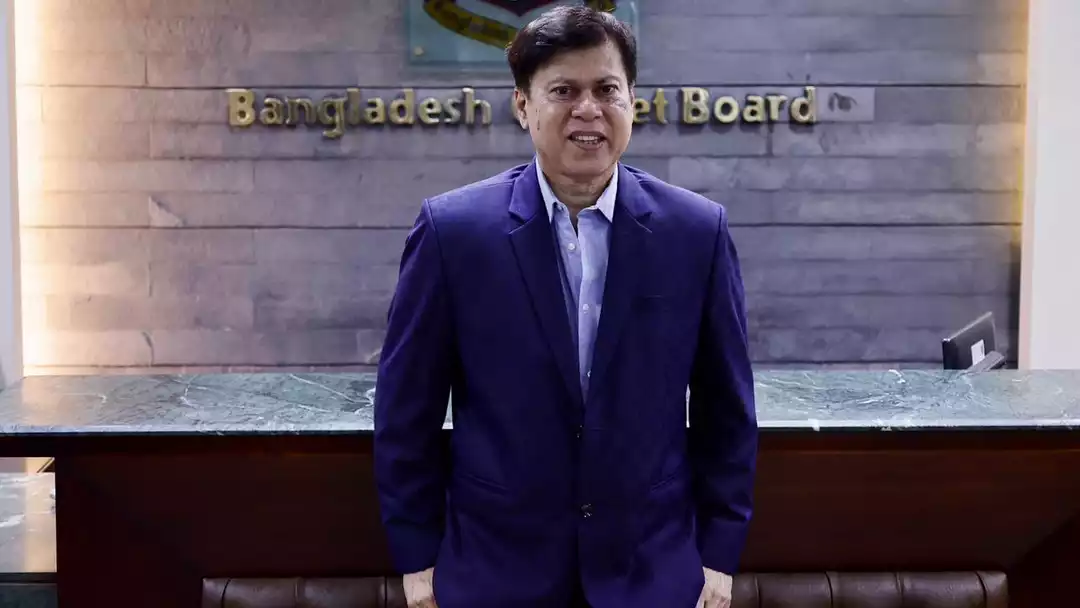
The ICC’s new Return to Play Post-Pregnancy Guidelines are a welcome development, offering guidance on recovery, training and practical support, but they stop short of guaranteeing paid maternity leave or protecting players’ salaries. The guidelines are futile if the member boards do not implement them. The BCB said that it will follow the ICC guidelines. Yet its women’s wing chairperson, Rafiqul Islam Babu, admitted he did not know why no guideline existed already, and CEO Nizam Uddin Chowdhury describes matters being addressed “case-by-case”.
This is a recurring theme in women’s cricket,
This is a recurring theme in women’s cricket, as maternity is not the only place where BCB turns a blind eye. This cannot be called an oversight because the system is working the way it is designed. On November 1, online news portal The Whistle published an 11-month investigation about the alleged sexual harassment by coaches and selectors. At every level, aspiring female cricketers depend on coaches and selectors for career advancement, creating a clear imbalance of power. The story unravels the system that perpetuates sexual harassment from district to national level.
National contracts last for one year, and their renewal depends on selectors’ assessments. Only 17 women currently hold such contracts. Former captain Jahanara Alam claims to have experienced the consequences of this discretionary power, which can also leave new mothers vulnerable to being dropped from the squad. She alleged that Manjurul Islam Manju, former selector and manager of the national women’s team, proposed a sexual relationship during the 2022 World Cup. Manju denies the claim, but a committee appointed by the BCB found preliminary evidence supporting two of her four allegations. Jahanara remained silent for years because the player feared losing her contract.
The committee also found that BCB had no framework to prevent sexual harassment, despite the 2009 High Court directive. The BCB could have used Jahanara’s case as an opportunity to investigate wider allegations of sexual harassment in women’s cricket, but there is little publicly available evidence that it did so. Action under the law was recommended, but Manjurul was only banned by the BCB. Ironically, he occupied no post at BCB at that time.
A harassment policy appeared on the BCB website
A harassment policy appeared on the BCB website on October 12, only after The Whistle began asking questions. Nizam Uddin Chowdhury told The Whistle it was approved in July and is an “internal policy”. The 10 contracted players The Whistle contacted had never heard of it, and no complaints committee has been named. The chairperson of the women’s wing also reportedly did not know such committees exist.
Herein lies the predicament because the problem cannot be found unless the victims speak up. When a coach allegedly groped a young female cricketer at 18, she left the field. Such departures, like that of athlete mothers, appear in no statistics. For this piece, I tried to find figures on how many players leave after marriage or after giving birth but could not find any data from the BCB. During the Covid lockdown, BCB director Ahmed Sajjadul Alam Bobby said female cricketers usually leave the game after marriage. Being aware of the problem yet failing to take any measures to address it is itself a deliberate choice.
Women’s cricket is treated as an afterthought time and time again. Women’s domestic match fees have doubled, yet the Tk 40,000 offered for longer-format matches remains far below the Tk 1.5 lakh paid to men for four-day fixtures. This makes cricket a lucrative sport for the male cricketers and an entirely different proposition for women, who are expected to show the same level of dedication as men and overcome additional societal barriers, yet receive only a fraction of the financial support needed to sustain their careers.
The consequences of this neglect are evident
The consequences of this neglect are evident on the field. The Women’s Bangladesh Premier League (WBPL) remains an unfulfilled promise. According to former captain Rumana Ahmed, the number of matches declined under Nazmul Abedeen Fahim’s tenure. In 2025, the Bangladesh Cricket League (BCL) ended after just two of its three scheduled matches, depriving players of valuable playing and earning opportunities. Worse, ahead of the 2025 World Cup in India, the national women’s team had to practise against the boys’ under-15 team because the BCB failed to arrange an international series, leaving them without adequate match preparation. Neglect follows in other places too; in 2025, the Cricketers’ Welfare Association of Bangladesh (CWAB) held pre-election meetings without a single woman present. There is no woman on the BCB’s newly elected board, and selector Salma Khatun is the only woman in a key national position, reports The Whistle. It shows the sheer lack of importance given to the female cricketers.
If the BCB is conscientious about its female cricketers, it must understand that without a safety net, women are likely to feel disquieted about returning to the field. It must form an independent complaints committee consisting of women and outside members. It should publish a written policy with paid maternity leave and protected contracts, medical assessments before return, and transparent rules for selection and renewal, so marriage, pregnancy, or refusing a coach’s advances never become unofficial reasons to drop anyone.
The instances make it clear that the neglect is staunchly structural because these issues persist from maternity leave, contract security, and sexual harassment cases to match fees, domestic tournaments, and representation in decision-making. Without a written policy, financial security and genuine investment in women’s cricket, their careers are being governed by discretion rather than rules. Women should not have to choose between motherhood and a career or between silence and a career.
Azra Humayra is sub-editor at The Daily Star Campus.
Views expressed in this article are the author’s own.
FollowThe Daily Star Opinion on Facebookfor the latest opinions, commentaries, and analyses by experts and professionals. To contribute your article or letter to The Daily Star Opinion, see ourguidelines for submission.
For all latest news, follow The Daily Star’s Google News channel.
Source: www.bing.com