
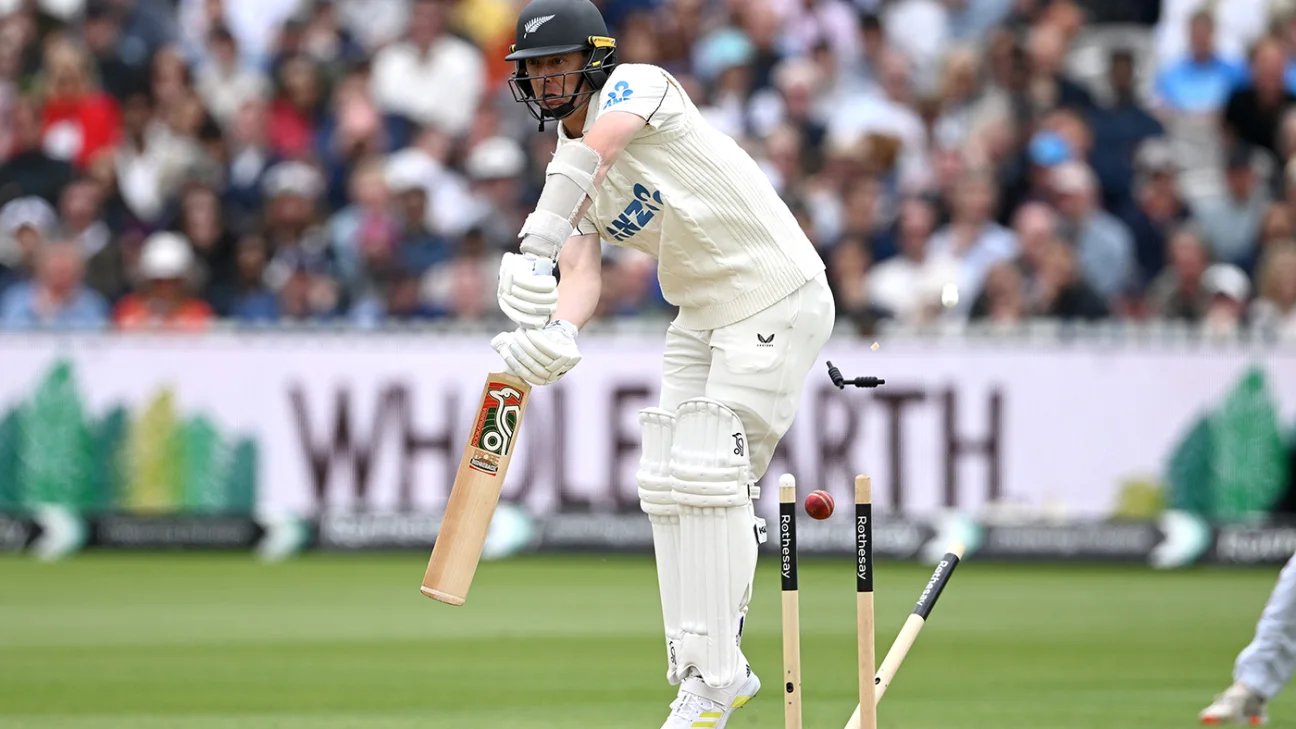
England won the first Test of their home summer by 115 runs, but the contest only reached the fourth morning of the match because of regular rain interruptions. All 40 wickets fell in the space of 996 balls, making it the shortest completed Test at Lord’s in almost 140 years.
Twenty-four of those 40 dismissals were either bowled or lbw, and in his assessment of the pitch, Andy Pycroft, the ICC match referee, said: “There was plenty of excessive seam movement throughout the Test and the ball also kept extremely low on several occasions. The bounce was variable throughout as 16 wickets fell on the first day and 17 on the second. There was simply an over-balance in favour of ball against bat caused by the pitch.”
MCC has invested heavily in attempts to improve the playing surfaces in recent years – including “steaming” the pitch and relaying the outfield this winter – but chief executive Rob Lawson acknowledged in a statement on Sunday that the pitch for the first Test had fallen short of expectations.
“We recognise that the pitch for this Test has shown more variable bounce than we would have wanted,” Lawson said. “We hold ourselves to the highest standards and are naturally frustrated when a surface falls short of those expectations.”
Lawson said that the combination of unseasonably hot weather in May followed by rain in the build-up to the Test had “presented a number of challenges” for head groundsman Karl McDermott and his staff. “However, we fully recognise the need to act quickly,” he added.
“I get asked questions all the time about the longevity of this format,” Stokes said. “The game is played over five days. Without the weather, it wouldn’t even have finished on day four. As someone who believes Test cricket should never disappear, that [early finish] is not ideal.
“From a playing point of view, it’s great to be challenged. We might have conditions that are completely different next week [at The Oval]. We will have to do the same thing: assess the conditions quickly and come up with the best chance of winning.
“It is tough for groundsmen. They are not actively producing wickets that are tricky, with 16 wickets falling in a day [as happened one day one]. But I get asked all the time about what needs to happen, saving Test cricket and this, that and the other. When you see extreme conditions like that, that’s not going to help the game in the future.”
MCC allowed fans onto the outfield after the early finish on Sunday, and fourth-day ticket-holders will be entitled to 50% refunds since fewer than 30 overs were bowled. On day three, fans were given full refunds after only 58 legitimate balls were bowled due to rain and bad light.
However, the PCB is contemplating whether to file an appeal with the ICC’s general council over the rating. A PCB spokesperson told ESPNcricinfo: “After examining the ICC’s concerns in light of the available evidence, a final decision will be made on whether to challenge this ruling. This process has already been started.”
The last time a Pakistan venue was handed a demerit point for a below par pitch was in December 2022 when Pycroft graded the surface for the first Test between Pakistan and England at Rawalpindi as “unsatisfactory”. The demerit point, however, was rescinded after the PCB’s appeal. It was the second consecutive demerit point for Rawalpindi after the pitch for the Test between Pakistan and Australia had also attracted a sanction from the match referee.
